"Hydraulic structures that have been in operation for more than 25 years, regardless of their condition, should be subjected to a comprehensive analysis once every 5 years to assess their strength, stability and operational reliability. On the basis of the actual physical and mechanical characteristics of the materials of structures and their bases, if necessary (if there are signs of a pre-emergency condition), a comprehensive analysis of the condition of the structure is carried out on an extraordinary basis" (SP 58.13330.2012 Hydraulic structures. The main provisions. Updated version of SNiP 33-01-2003, paragraph 6.5).
The purpose of a multifactorial examination (complex analysis) The purpose of hydraulic structures is to assess the actual technical condition of Hydraulic structures, the main equipment of Hydraulic structures , determine the residual life of their elements, as well as establish safety deficiencies to assess the possibility of continuing operation of Hydraulic structures beyond the designated (or 25-year) service life. The results of a multifactorial inspection of Hydraulic structures are the basis for the preparation of Hydraulic structures for the extension of their service life.
Multifactorial examination (complex analysis) Hydraulic structures include:
- assessment of the condition of building structures and structures based on the results of the analysis of data monitoring their condition performed at the facility;
- inspection of control and measuring equipment, determination of its operability and reliability of its indications. Issuing recommendations on the installation of additional control and measuring equipment, repair and operation;
- assessment of the strength characteristics of the soils of the base, dam body and slopes of structures;
- performing control measurements of stresses, temperature, piezometric pressures, water filtration rate and flow rate in concrete and soil massifs;
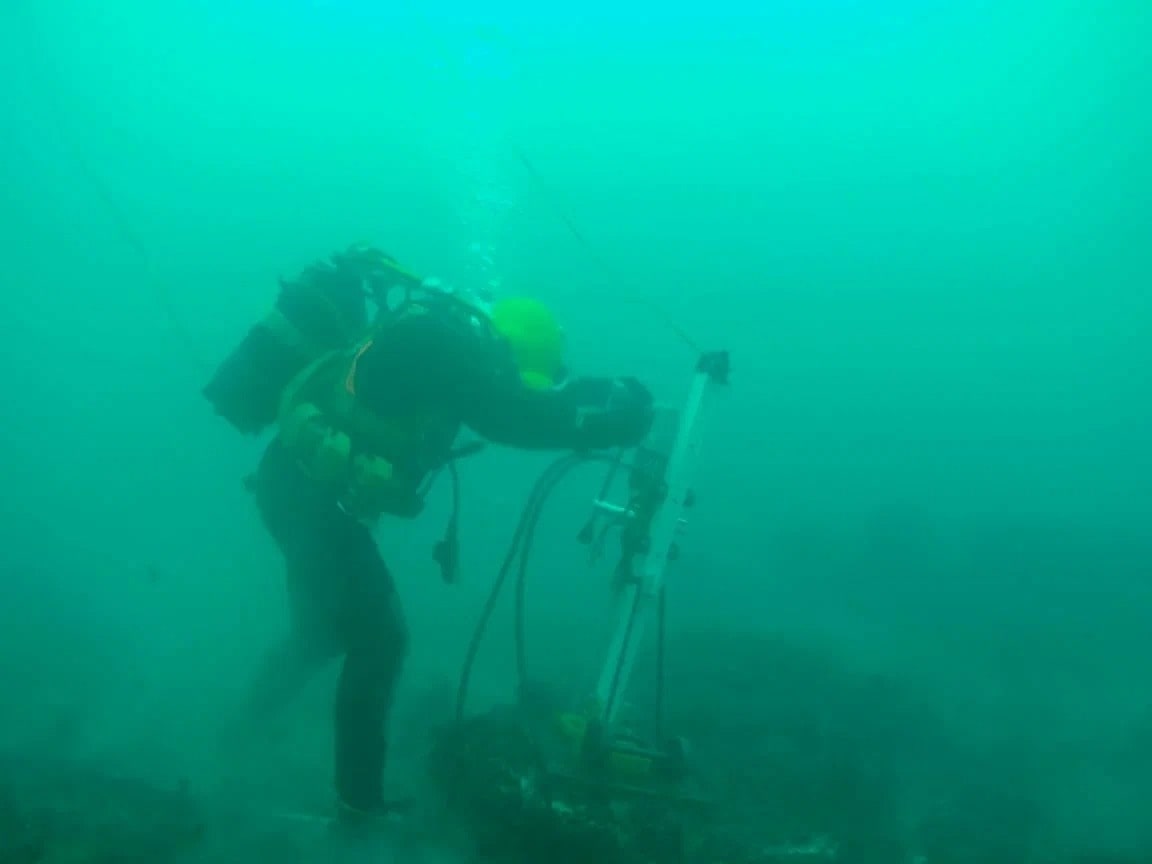
- performing an underwater technical inspection of the GTS (underwater inspection of the pressure front of the dam, clarification of the degree of siltation of the intake, the condition of Hydraulic structures, etc.). Assessment of the operational safety of underwater elements of the GTS;
- carrying out verification calculations of structures and structures for strength and stability (static and dynamic) according to the specified calculation schemes and using actual operating loads and impacts, physical and mechanical characteristics of materials, geometric dimensions, identified defects and damage to the structure.
Technical condition report based on the results of a multifactorial examination (complex analysis) The GTS includes:
- results of the assessment of the actual technical condition of the GTS, justification of the possibility of an additional service life of structures;
- recommendations for strengthening structures, restoring their bearing capacity (eliminating defects/damages) or compensating for safety deficiencies (if necessary);
- recommendations for the reconstruction or modernization of systems and (or) elements, if necessary to extend the service life;
- recommendations for the replacement of equipment and elements that have exhausted their life (if necessary);
- recommendations on the scope of monitoring the current state of the GTS and equipment, during the additional life of the GTS.